

From optimizing API calls to reducing bundle sizes and implementing efficient state management, performance considerations shape my development decisions early in the process. On mobile especially, where users may be on slower networks or older devices, performance can determine whether an app is used or abandoned.
Modern application design goes far beyond aesthetics. In this article, I share my approach to building innovative web and mobile applications that balance performance, scalability, and user experience. From choosing the right architecture to designing intuitive interfaces, this post explores how thoughtful design decisions lead to products users actually love.
Great application design isn’t about adding more—it’s about removing friction. When users stop thinking about the interface and start focusing on their goals, design has done its job.
In today’s digital landscape, building an application is no longer just about making something that works. Users expect applications to be fast, intuitive, reliable, and visually engaging—all while seamlessly fitting into their daily lives. For me, innovative application design lives at the intersection of functionality, scalability, and user experience. It’s not about chasing trends; it’s about making thoughtful decisions that result in software people genuinely enjoy using.
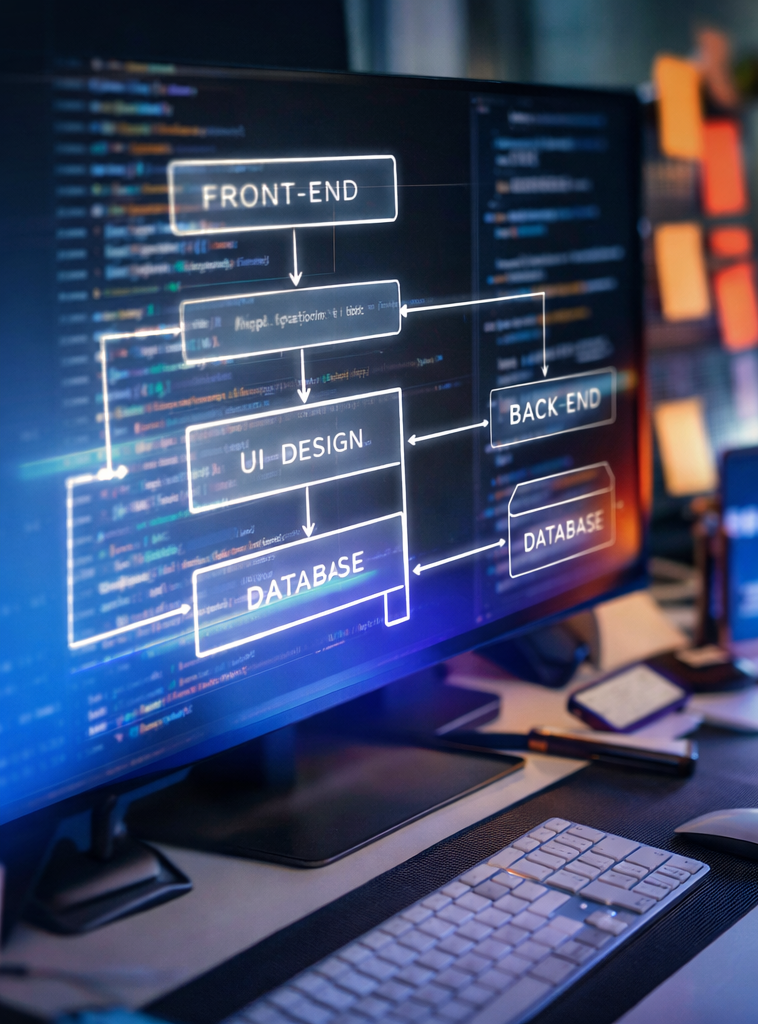

Over the years, working across web and mobile platforms, I’ve learned that great applications are rarely the result of a single brilliant idea. Instead, they are built through a deliberate process—one that blends technical expertise with empathy for the end user.
Design Starts With the Problem, Not the Interface
One of the most common mistakes I see in application development is starting with visuals before clearly defining the problem. While design aesthetics are important, innovation begins by asking the right questions:
- Who is this application for?
- What problem are they trying to solve?
- What friction exists in their current workflow?
Before writing a single line of code or opening a design tool, I focus on understanding the user’s pain points. This often means mapping out user journeys, identifying bottlenecks, and clarifying what success looks like from the user’s perspective. When the problem is clearly defined, design decisions become much easier—and far more effective.
Simplicity Is a Feature
Innovative design does not mean complex design. In fact, the most innovative applications often feel effortless to use. Achieving that simplicity, however, requires discipline.
I strive to remove unnecessary steps, reduce cognitive load, and design interfaces that guide users naturally. This includes:
- Clear visual hierarchy
- Consistent spacing and typography
- Intuitive navigation patterns
- Purposeful animations instead of decorative ones
Every element on the screen should have a reason to exist. If it doesn’t improve usability or clarity, it doesn’t belong.
Performance Is Part of the User Experience
A beautifully designed application that feels slow will always frustrate users. Performance, in my view, is a core design principle—not a technical afterthought.
From optimizing API calls to reducing bundle sizes and implementing efficient state management, performance considerations shape my development decisions early in the process. On mobile especially, where users may be on slower networks or older devices, performance can determine whether an app is used or abandoned.
Innovation means anticipating these constraints and designing systems that feel fast and responsive under real-world conditions.
Designing for Scalability From Day One
Many applications start small, but few stay that way. One of my guiding principles is to design applications with growth in mind—even if the initial release is minimal.
This doesn’t mean over-engineering. It means choosing architectures and patterns that allow the application to evolve without painful rewrites later. Modular components, clean separation of concerns, and well-defined APIs make it easier to add features, onboard new developers, and support a growing user base.
An application that scales gracefully is one that was designed intentionally.
Accessibility Is Not Optional
True innovation includes everyone. Accessibility is not a box to check at the end of a project—it’s an essential part of responsible application design.
I prioritize accessibility by:
- Using semantic HTML and proper ARIA roles
- Ensuring sufficient color contrast
- Designing for keyboard navigation
- Supporting screen readers and assistive technologies
Accessible design improves usability for all users, not just those with disabilities. When applications are easier to navigate and understand, everyone benefits.
Leveraging Modern Tools Without Becoming Dependent on Them
Modern frameworks, libraries, and AI-powered tools have dramatically accelerated development workflows. I actively use these tools to improve efficiency, but I remain mindful of their limitations.
Innovation comes from understanding why a tool works, not just how to use it. By maintaining a strong foundation in core technologies—JavaScript, Python, system design, and UI fundamentals—I’m able to make informed decisions about when a tool adds value and when it introduces unnecessary complexity.
Tools should serve the product, not define it.
Continuous Improvement Through Real Feedback
No application is perfect at launch. The most innovative products evolve through continuous feedback and iteration. Analytics, user testing, and direct feedback help identify what’s working and what isn’t.
I see application design as a living process. Each update is an opportunity to refine the experience, improve performance, and better align the product with user needs. Innovation thrives when teams are willing to listen, adapt, and improve over time.
Final Thoughts
Innovative application design is not about flashy features or following the latest trends. It’s about building thoughtful, reliable, and scalable solutions that respect users’ time and expectations.
For me, innovation means:
- Solving real problems
- Designing with intention
- Writing clean, maintainable code
- Prioritizing performance and accessibility
- Building software that grows with its users
This philosophy guides every project I work on—whether it’s a simple web application or a complex, data-driven mobile platform. At the end of the day, the best applications are the ones users don’t have to think about—they just work.
Leave a Reply